Blackwater Macros
A simple, private calorie and macro tracker for Android, with targets based on fully transparent science.
Kotlin, Android, TypeScript, Next.js, PostgreSQL, Drizzle, Vitest, GitHub Actions, fastlane
The problem
Most calorie trackers are either bloated (streaks, badges, social feeds) or opaque: they give you a number and never explain where it comes from. I wanted one that does one thing well, keeps my data on my phone, and shows its maths.
What it does
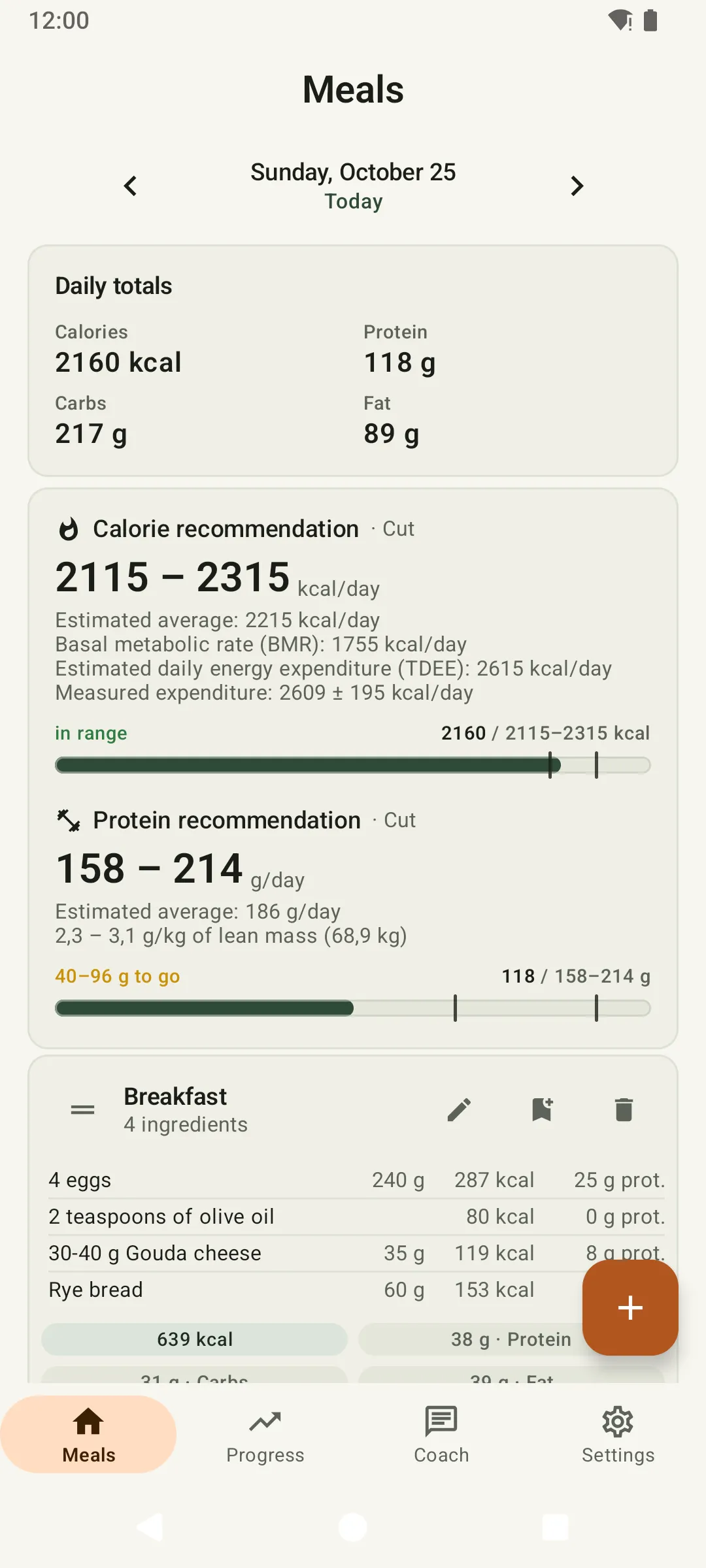
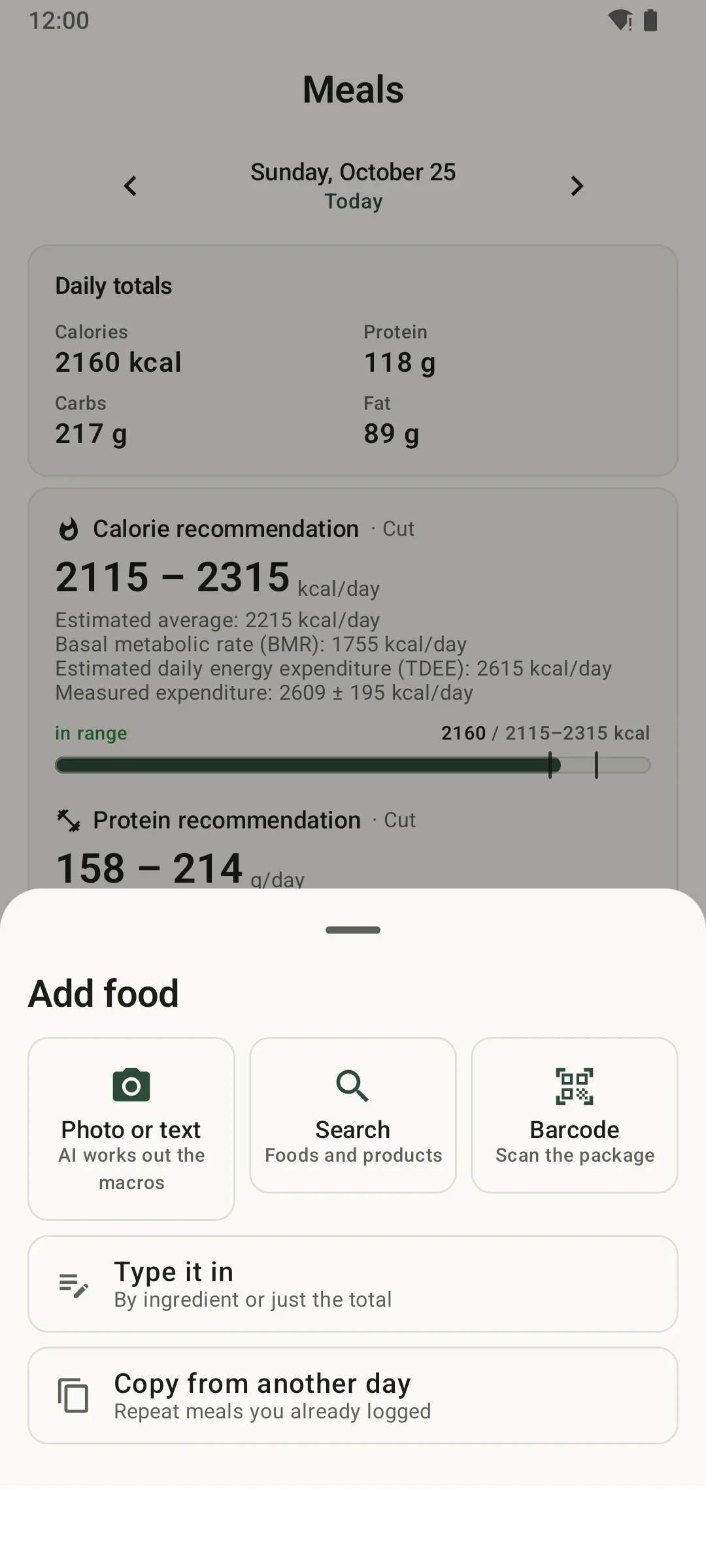
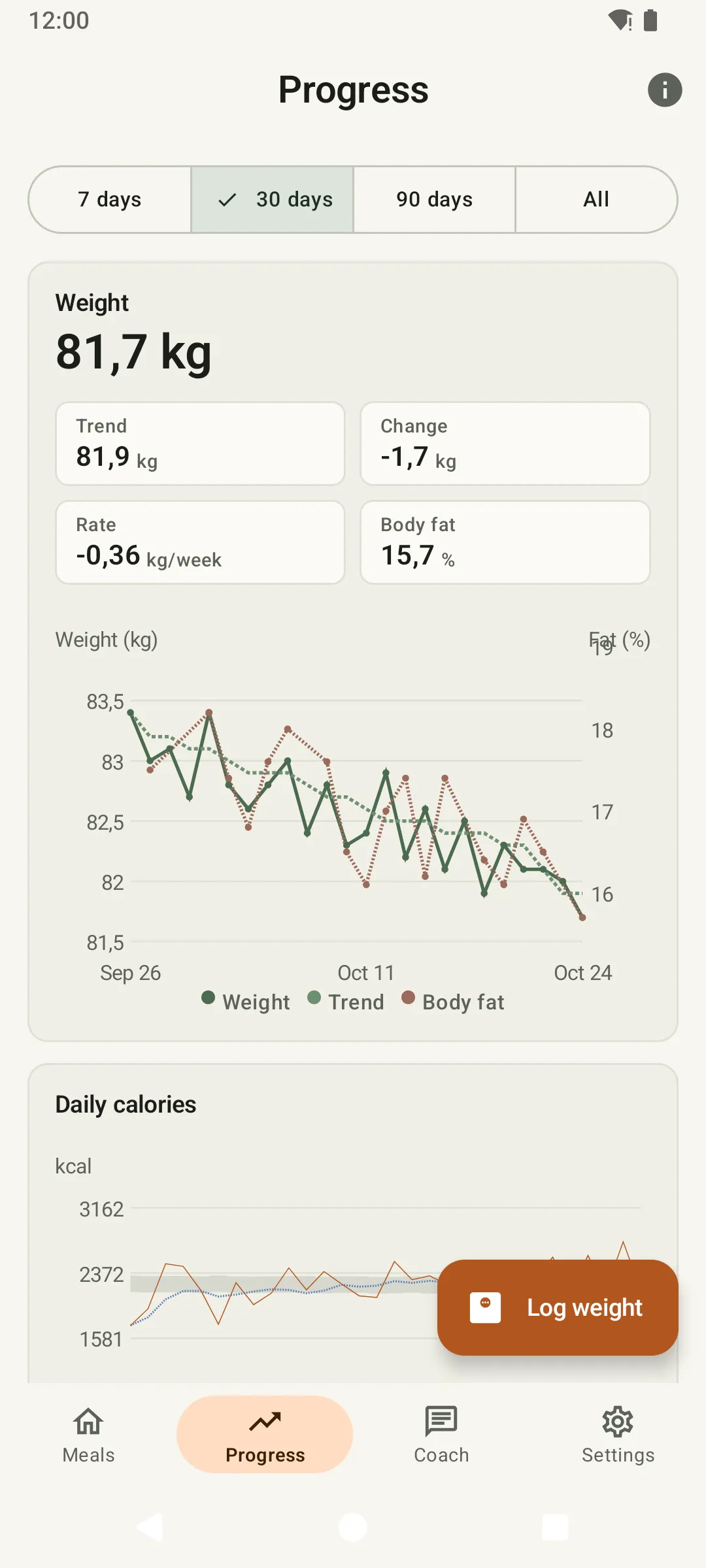
You log what you eat (by search, barcode, photo or by hand) and your weight, and the app tells you how much to eat to reach your goal. Every target comes from current nutrition research, such as the Mifflin-St Jeor equation and the FAO/WHO factorial method for activity, and every formula, source and limit is explained inside the app. After a few weeks it checks its own estimate against your real weight trend.
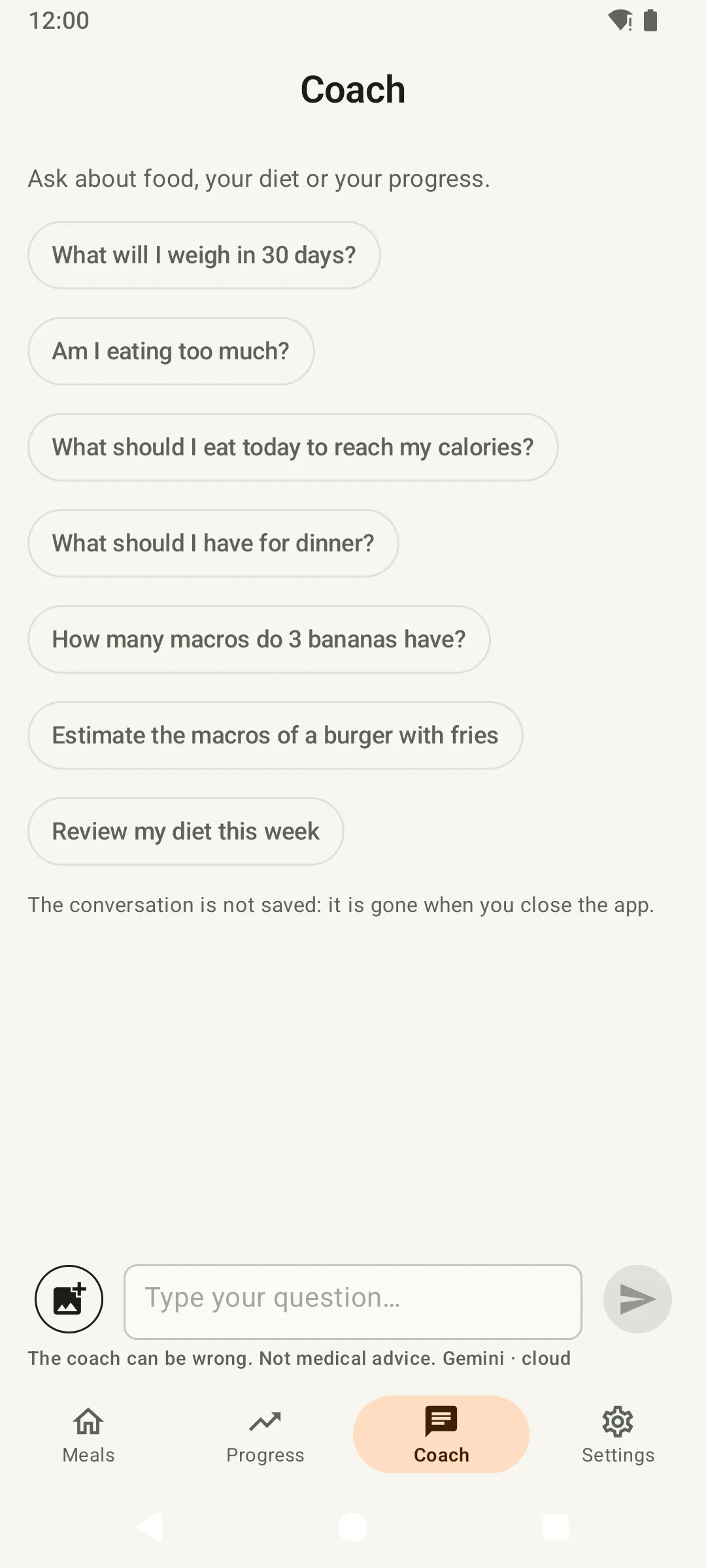
AI is optional. You can bring your own key (Gemini, OpenAI, Anthropic, OpenRouter or any compatible server) or run a model on the phone, and use it to estimate a meal from a photo, read a nutrition label, or ask a coach that knows your numbers. The app speaks English, Spanish, French, Italian and German.
How it is built
- One core, two platforms. The nutrition and statistics algorithms live in a pure, dependency-free core written once in TypeScript and ported to Kotlin. A script checks that both versions stay in sync.
- Privacy is tested, not promised. The app talks only to the hosts it needs, and a test fails if the code ever learns a new address.
- Offline first. Everything works on the phone, and changes sync when you are back online.
- Releases are automated. GitHub Actions runs the tests, builds the app and the website, and publishes releases. F-Droid is coming soon.
How I worked with agents
I built Blackwater Macros with AI coding agents, and the repository shows how. An
AGENTS.md points every agent to a single technical guide that holds the architecture,
the API contract, the TypeScript-to-Kotlin rules and the verification steps, and that
guide is updated in the same change as the code. Skills cover recurring tasks, work happens
on a dev branch, and unit and behavior tests have to pass before anything ships. I
decide the design and review every change; the agents make me much faster at writing it.