Bolivia à la carte
A free travel guide to Bolivia, with 110 places on an interactive map, a route calculator and a trip planner, in three languages.
JavaScript, Leaflet, Node.js, Service Worker, GitHub Actions, Cloudflare Pages
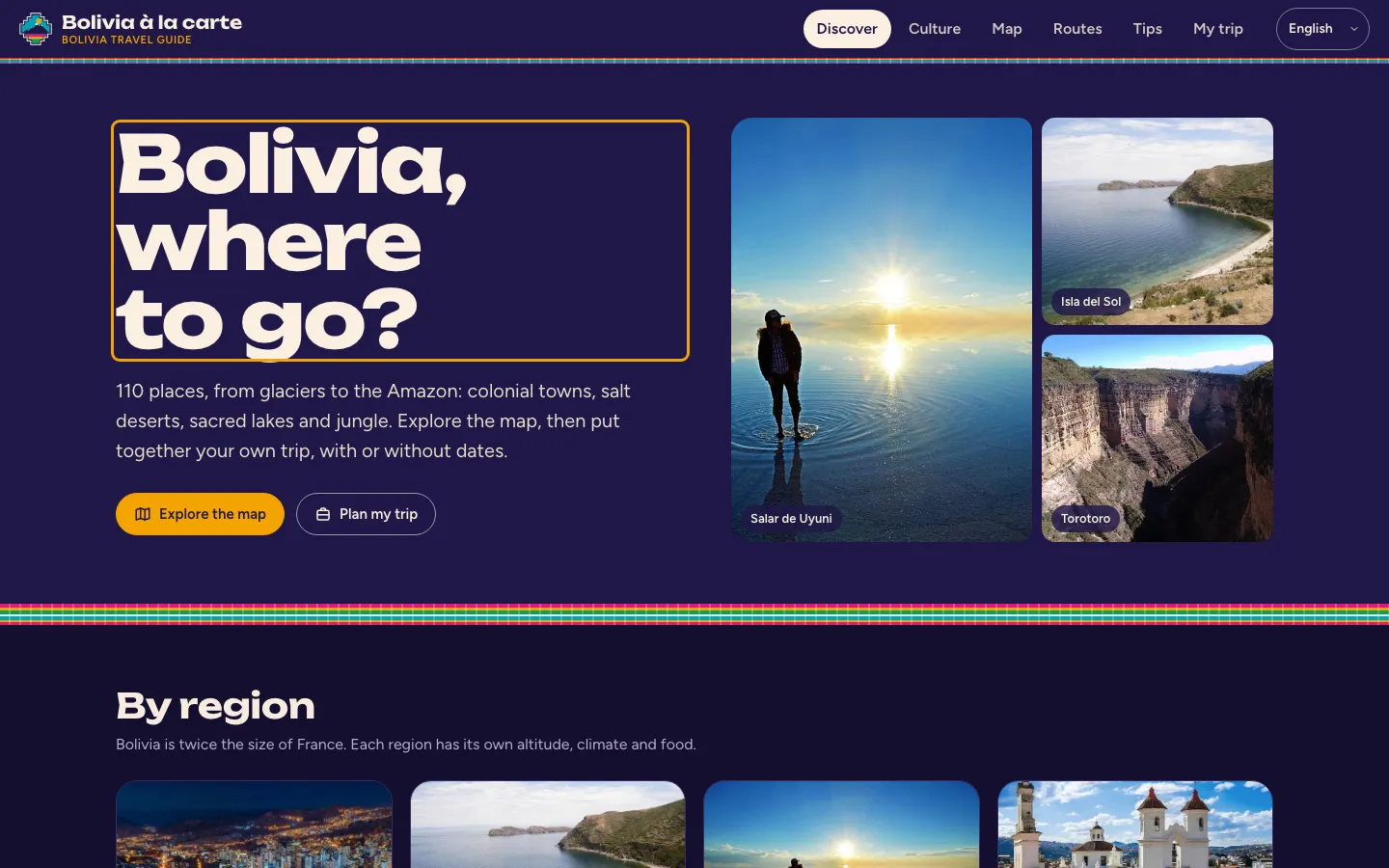
What it is
Bolivia is twice the size of France, yet most travellers only see two or three places. Bolivia à la carte is a free guide to 110 of them, from glaciers to the Amazon: colonial towns, salt flats, sacred lakes and jungle. Each place has photos, its history, things to do, local food, the weather month by month and how to get there.
Everything is on an interactive map. A route calculator finds the fastest way between two places by bus, train, plane or boat, and an optional planner builds a trip you can share with a link. There are pages on festivals, food, UNESCO heritage, crafts and legends, and practical tips on money, buses, safety and border crossings. Prices use the official exchange rate of the day. The guide is in French, English and Spanish.
How it is built
- No framework, no dependencies. Plain JavaScript and CSS. The map and its geometry load only when you open it, and a service worker keeps the guide usable offline.
- Every fact is written once. All the content lives in YAML files, and a build script generates the app data, the three languages and more than 350 static pages for search engines, with structured data and a sitemap.
- The build checks the content. A missing translation, a photo that isn’t there or a place no route reaches stops the build, with the file and field to fix. Tests cover the build, the route search and the festival date rules.
- It runs itself. GitHub Actions rebuilds the site when the content changes and updates the exchange rates from the Banco Central de Bolivia every morning. Cloudflare Pages publishes every change.
- Anyone can edit it. Texts and photos can be changed directly on GitHub, without programming.
How I worked with agents
I built the guide with Claude Code. I made the product and design decisions and reviewed every change. The repository has a technical guide, read by the agents before any change and updated in the same commit, that explains the architecture, the content files and the editorial rules: tone, safety advice, what is left out and why. The build’s content checks and the tests catch mistakes before they reach the site.